The Real Vampire Living Among Us: SQL and How Snowflake/DBT Made It Chill Again

A Note from the Lab:
I had no idea there were so many Van Helsings out there. When I first posted this on LinkedIn, it “sucked” up a lot more attention than I planned—from both the Vampires and their sworn enemies. I’m starting to think they’re onto me.
Since I’ve been found out, I needed a secret place to continue my work on a cure before the next full moon. Welcome to Heart-A-Tech. This is the Director’s Cut.
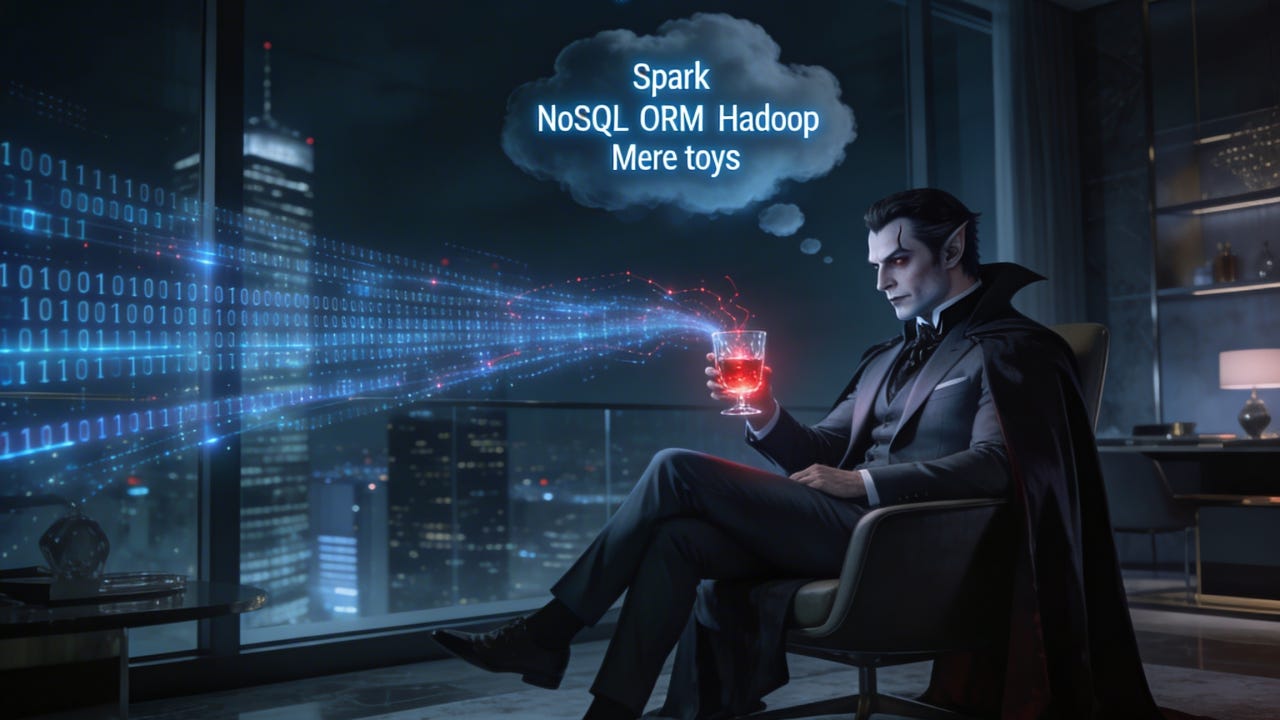
The Apex Vampire Among Zombies:
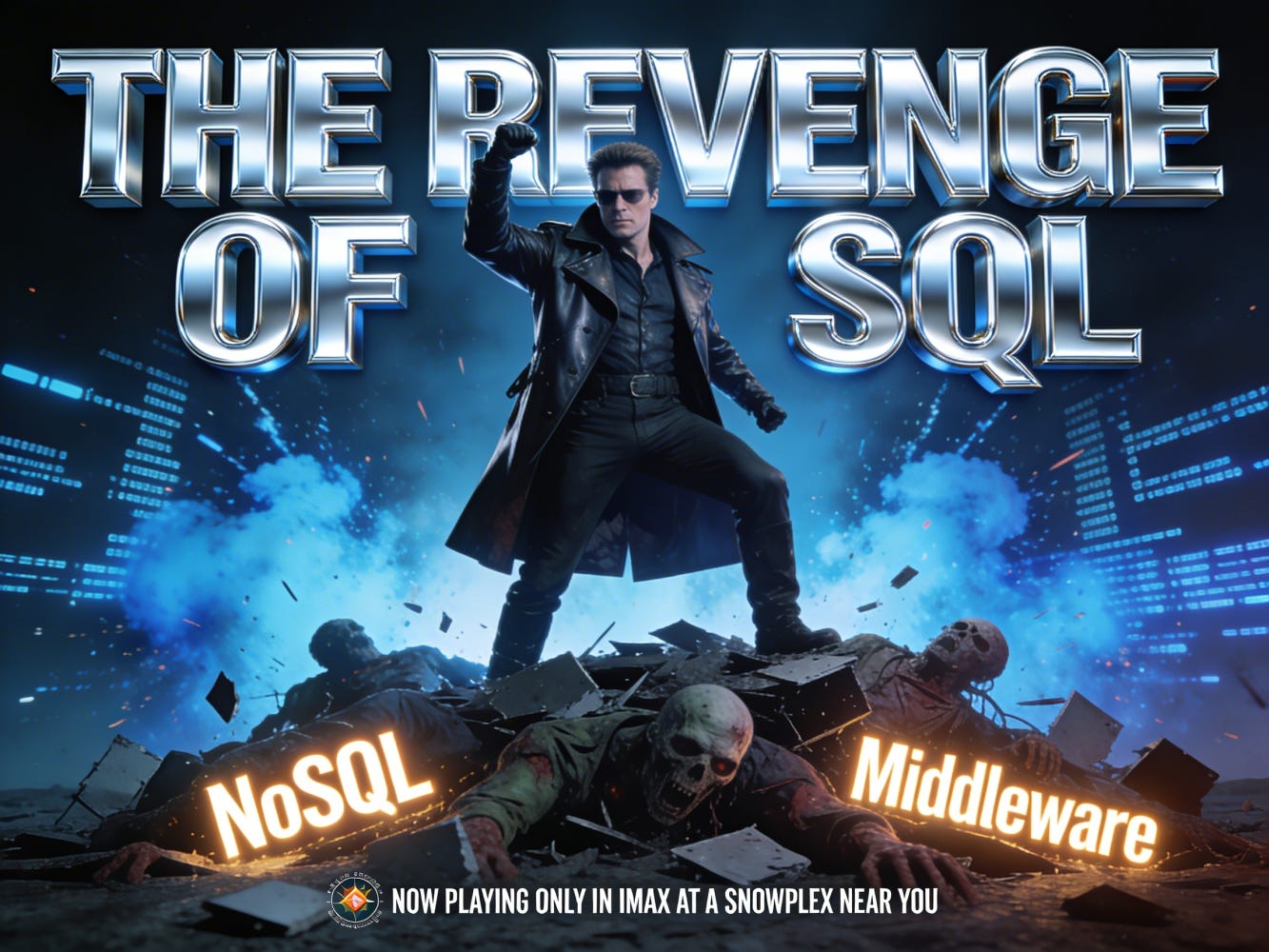
SQL has been the ultimate apex vampire living among hordes of zombies. While “modern” frameworks and NoSQL fads shuffled around like the undead—clumsy, loud, and destined to rot after six months of hype—SQL stayed in the shadows. It sat quietly, doing what nature evolved supreme predators to do: seductively and charmingly demonstrating that data is the lifeblood of the most powerful entities. SQL has had no equal, nor does it look like it ever will.
It’s been starved, downplayed, cheated on, and ignored. I’ve seen the industry try to shoot it in the head, the arms, the legs, and the heart—and it just keeps coming. It won’t die. It is the ultimate predator at the top of the food chain because it possesses a preternatural patience. It didn’t brag or boast; it lived in a dark room, stayed silent, and made sure it always spoke last.
It never ate too much or took too much to the point where it would be noticed or thrown off balance. SQL is the sophisticated, non-mortal entity of our time, blending in with the people and doing more good than harm while every “hot new thing” tried to drive a stake through its heart.
Nostalgia—Isn’t It Wonderful?
I remember my very first career-changing programming language. Sure, I had already messed around with Basic, Pascal, and C, but the “big hitter” that launched my career was plain old SQL. Everyone wanted data in the late ‘90s, but not many knew how to twist and turn it at scale. By mastering SQL, I was able to ascend the job chain simply because I could handle the tasks others found “daunting.”
But for the last two decades, the tech industry has been trying to kill my favorite language.
The Long War on Simplicity:
I’ve watched the industry dump a cloud of unnecessary complexity onto the technology domain. We’ve seen dozens of frameworks designed to solve a 10% problem while making the other 90% of the work significantly more difficult.
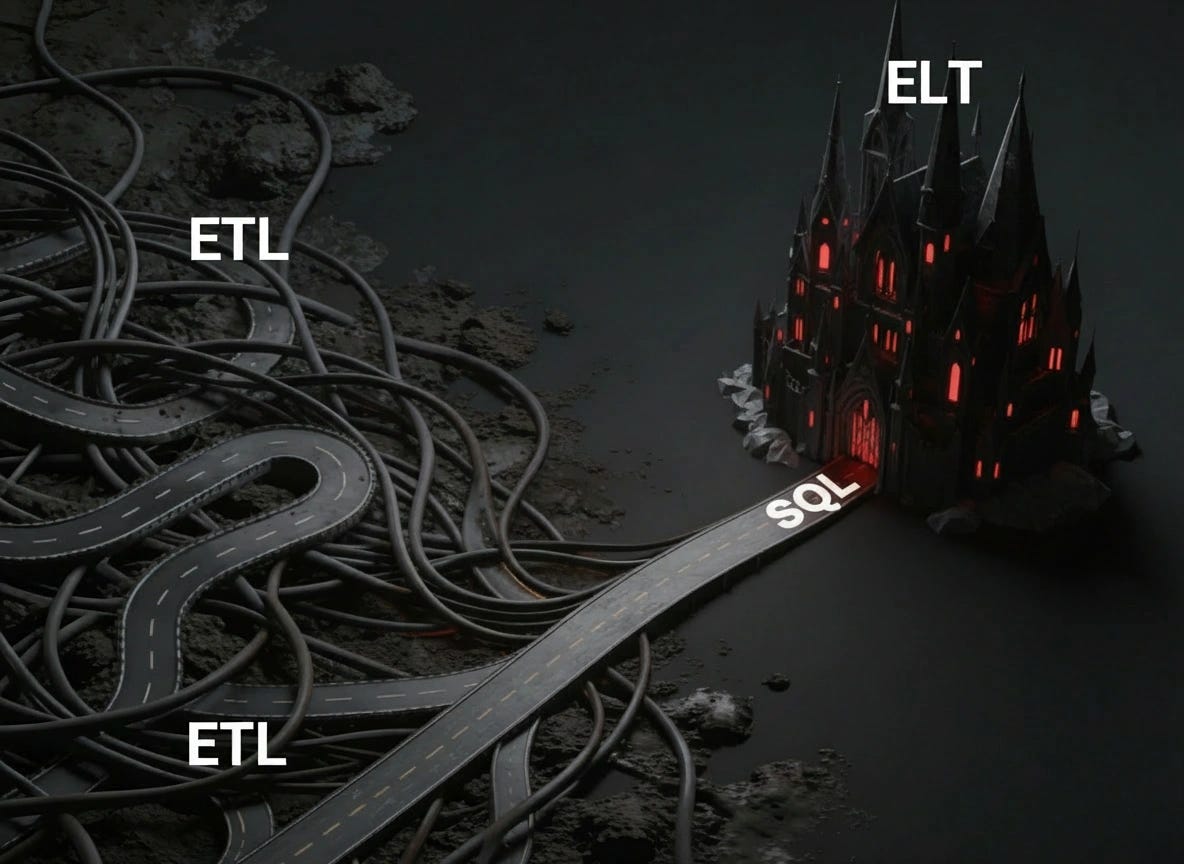
I call it the “MVC Dogma.” I’ve mentored so many developers who viewed my focus on the data programming layer as a “dated” approach. They were convinced everything had to exist in the middleware, forcing them to write mountains of code that wasn’t nearly as fault-tolerant as what a database can do natively. Then there was the “black art” of ETL tools—moving massive amounts of data over network bandwidth just to put it back into a target system. It was a 15-year detour through the woods when the highway was right there.
Why the Vampire is Finally Cool Again:
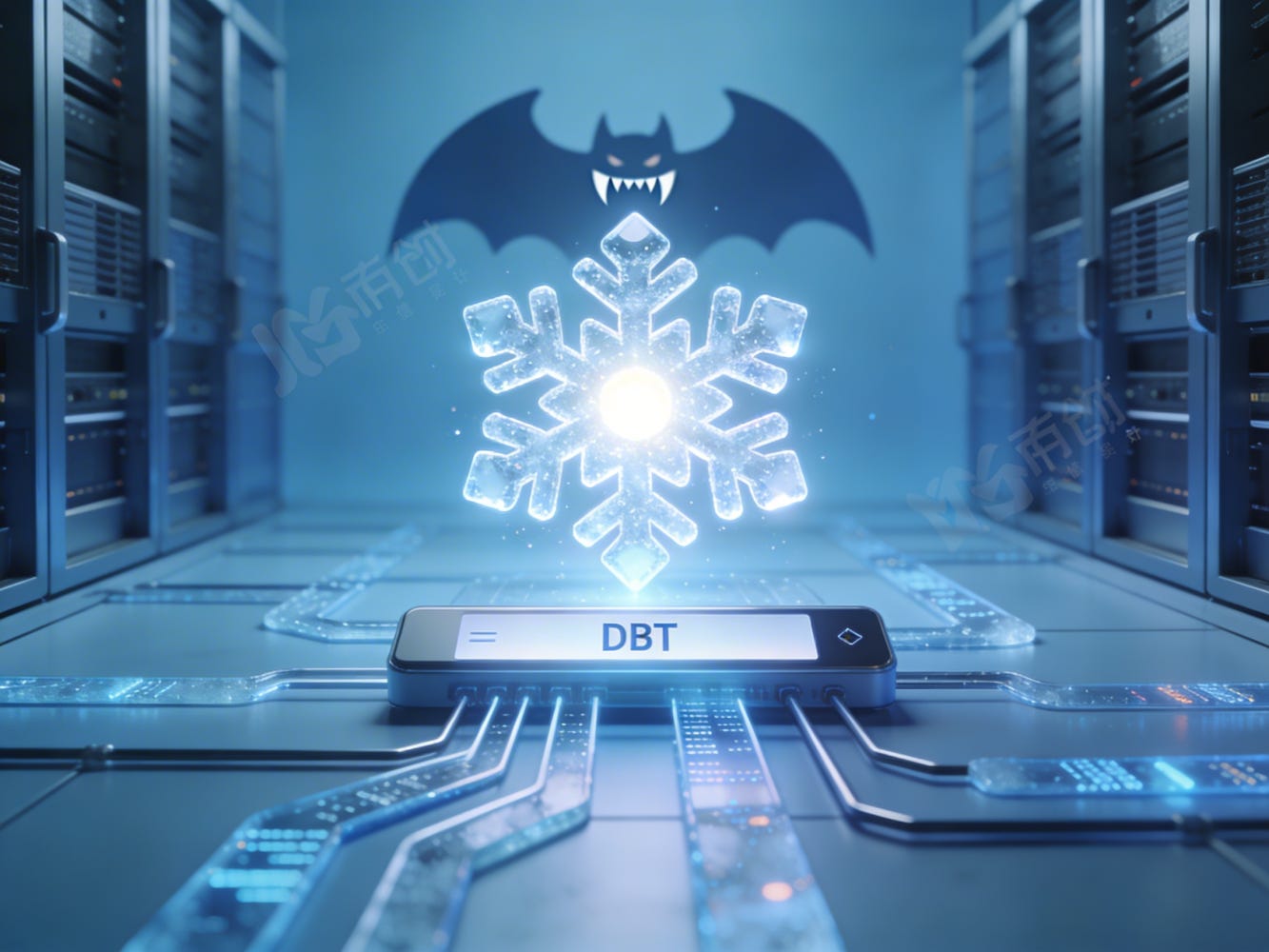
And now, thanks to Snowflake and dbt, the vampire is finally “chill” (and cool) again. Snowflake is a “SQL-first” platform that finally solved the horizontal scaling issues that haunted traditional RDBMS vendors for years. They realized that SQL isn’t the problem; the hardware was. By separating compute from storage, they gave the vampire a penthouse suite. Meanwhile, dbt (Data Build Tool) arrived as the perfect companion—bringing engineering rigor and version control to SQL without forcing us to write 5,000 lines of Java just to join two tables.
My Vindication Tour:
I’ll be honest: I feel completely vindicated. My design instincts—favoring ELT over ETL since the late ‘90s—are now considered the “modern” gold standard.
I’ve thrown away my metaphorical cane and stopped asking for the Senior Citizen discount. I’m even fighting through the “cobwebs” to recall every young hotshot developer who joked about my “old-timer” ways so I can reach out and give them a friendly, “I told you so, whippersnapper.”
It turns out that staying organized, naming things correctly, and favoring simplicity over complex stacks wasn’t “dated”—it remains foundational.
Moving forward: (Maybe I didn’t walk up hill both ways to and from school as a kid)
The ecosystem is only getting stronger. Snowflake is now closing the gap on the OLTP space with “Unistore” and Hybrid Tables. They are closing the loop on the heart of all technology: the data. I mention Snowflake as prime example but there are many data platforms now coming full circle back to SQL. It just made and makes sense.
They say it’s what’s on the inside that counts. Well, Snowflake has the biggest heart I’ve seen in decades. In addition to my beautiful real-life wife, I now claim a second “trophy wife” named Snowflake—beautiful on the inside and out. There are other platforms out there evolving back to simplicity but for now after reviewing many, Snowflake just seems to be the Picasso of the bunch in my opinion.
We’re not simply returning to the old ways; we’re playing the “best hits” from the last 30 years on a much better sound system. SQL is back at the center of the universe, and for this old-timer, the world finally makes sense again. Big shout out to the real SQL OG’s: Donald D. Chamberlin and Raymond F. Boyce. Tech from the 70’s still dominating today.
Stay chill.
About the Author
Tim Wiley is a senior-level Data Architect and Engineer with over 25 years of experience navigating the shifting tides of the data landscape. From the early days of Oracle and SQL Server to the modern era of cloud-native platforms, Tim has built a career on the belief that data should be elegant, organized, and—above all—simple.
With a “unique niche” background that spans from hand-coding complex PL/SQL engines to architecting multi-domain data ecosystems, Tim specializes in helping organizations cut through the “middleware noise” to find the truth in their data. He is a vocal advocate for ELT (Extract, Load, Transform) and metadata-driven workflows that prioritize performance without sacrificing engineering rigor.
When he isn’t optimizing bad SQL or RDBMS tuning or fighting through the technical “cobwebs” of legacy systems, Tim shares his architectural insights and a healthy dose of technical sarcasm at www.twutil.com.
Looking for senior-level insights for your next data project? Connect with Tim on [LinkedIn] or visit his site to see how he can help your team move back to the “highway” of simplicity.