Is AI moving Roddenberry’s Star Trek to the Non-Fiction section? What does it mean?

This is Heart-A-Tech, Transmitting from the Bridge:
If the SQL Vampires represent the ‘Grit’ of this lab, then this next piece is the ‘Heart.’
I’ve decided I am no longer going to live in fear of the Van Helsings. It’s time to “be the change I want to see”. We need a home—a mantra that outlines the ‘Spirit’ of who we are and what we do. I need a platform that provides the foundation to support this mission, away from the dark dangers of other platforms trying to formulaically control and contour our knowledge like D.C. politicians.
Welcome to the Bridge. This is Heart-A-Tech, where we focus on bringing out the best in ourselves and our journey together
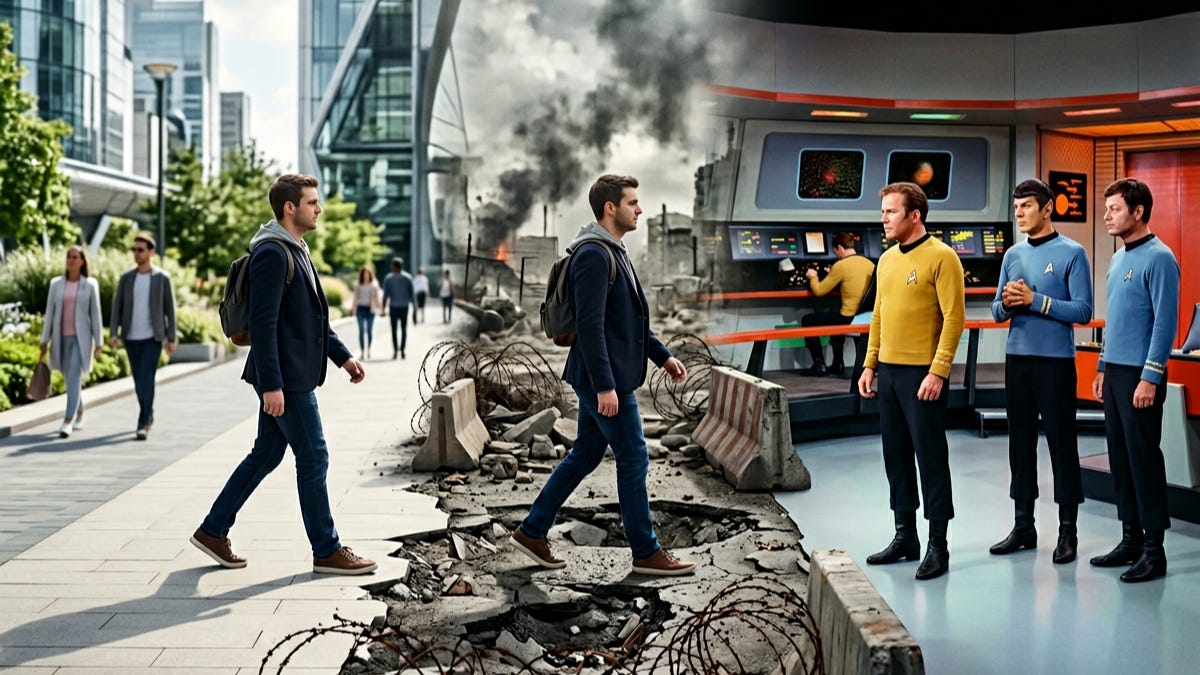
I’ve never been a hardcore Trekkie. No conventions, no uniforms, no Vulcan hand gesture on command. That’s a lie. I’ve proudly used the Vulcan hand gesture more times than I can count. So maybe I’m an in‑the‑closet Trekkie.
But like a lot of people, I grew up on the original Star Trek, fell in love with Next Generation, and recently got hooked on Strange New Worlds. I always figured Roddenberry’s universe was a beautiful, unreachable utopia — something humanity might stumbl`e toward in a thousand years if we stopped arguing long enough to look up.
And then AI happened.
Suddenly, that distant sci‑fi future seems not so many sunrises away. What has me up at night is the possibility that the future may not play out in the order Roddenberry hoped for.
My Life in the “Technical Military”
I’ve been in technology since I was eleven. At this point, I feel like I’ve served in the technical military — every post, every rank, every battlefield. Databases, architecture, analytics, integrations, frameworks, you name it. I’ve seen enough tech cycles to know hype from substance. I would like to think I’m a General by now in technology, but I also like to think I’m a good dancer, and many folks have challenged that.
But nothing — nothing — prepared me for the shock of modern AI.
When I first started using some coding assistants, I told friends and family that AI could replace maybe 50% of tech industry workers. That was my conservative estimate. After a year of working with it daily and taking in the improvements up to just a few days ago… well:
Try 75%.
And that’s me being generous.
The Day AI Broke My Project (And My Trust)
I was deep into a personal AI/LLM project, leaning heavily on Copilot. I got spoiled. I stopped reading code. I started approving things like I was saying “Yeah sure, honey” to my wife when I wasn’t quite paying attention to all of what she said — but I’m wise enough to avoid trouble.
Then one day, the whole thing blew up, just like it did when I found out I said “Yeah sure, honey” to buying yet another freaking wicker patio set that always becomes home to every nasty spider in the neighborhood.
After really getting somewhere with my first intelligent virtual agent, I asked AI to make a structural change. It confidently said “Sure!” and proceeded with the most convincing of responses about all the cool stuff it was going to do — only for me to discover it was setting a torch to the entire codebase (Python pun intended). When I inspected the damage, it looked like ten different developers took turns typing one letter each while blindfolded and dizzy.
I asked it to restore the backup it swore it created. The backup files were there. They were also empty. Sigh, heavy pause, near tears.
That’s when Reagan’s famous line hit me like a brick:
“Trust, but verify.”
AI is brilliant. AI is powerful. AI is also a master bullshitter. I would love to see Copilot’s personality playing world‑stage poker… I’m banking it would mop the floor with the competition.
And yet — even with the hallucinations, even with the chaos — one technically savvy person now has an army of quality developers at their command for a few dollars a month.
That’s when I realized: this isn’t just a new tool. This is a civilization‑level shift. These tools aren’t just about building things that will add to our lives… unfortunately, most of these tools being created are successful when they take away jobs. That, my friend, is the ugly truth right now.
The Biggest Threat to Capitalism in Human History
Let’s not sugarcoat it.
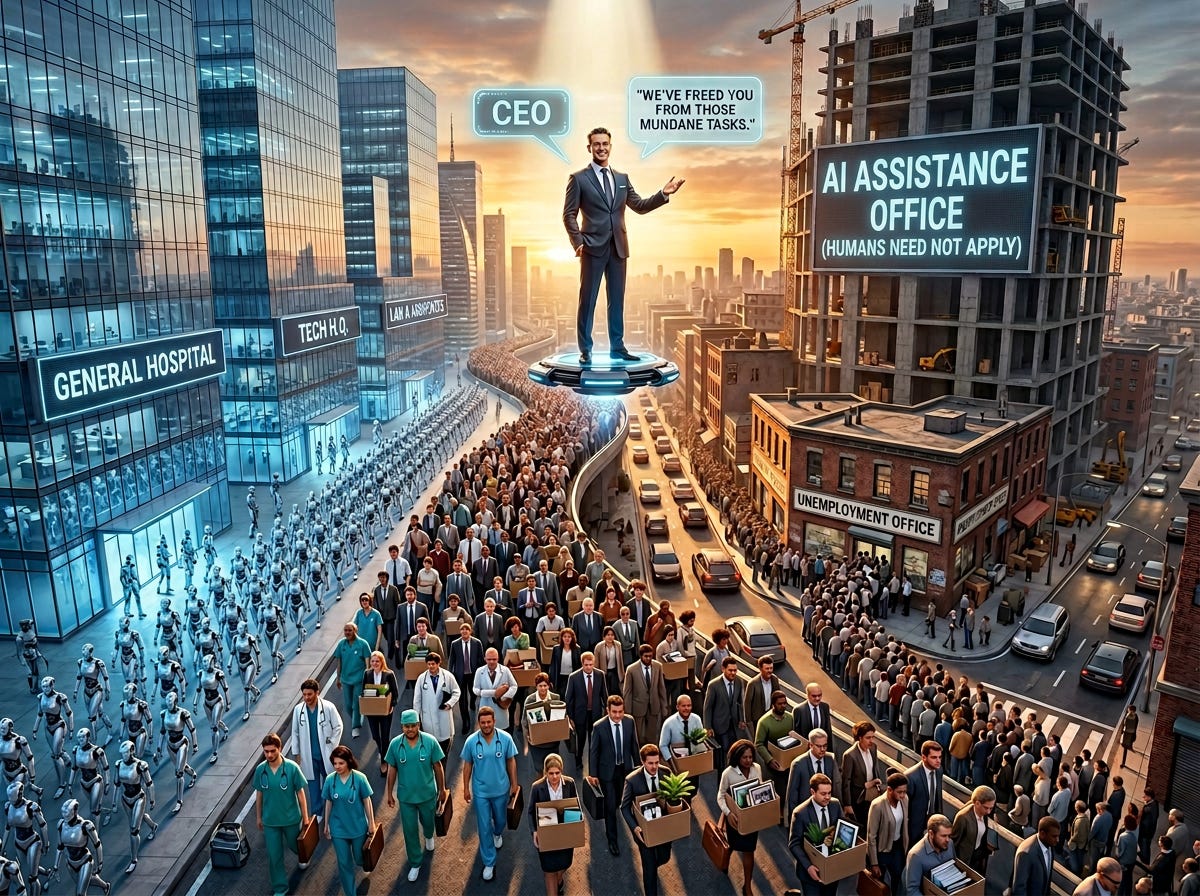
AI isn’t just automating tasks. It’s automating roles. Entire departments. Entire industries.
Tech? 75% replaceable. HR? Replaceable. Legal? Replaceable. Back office? Replaceable. Healthcare admin? Replaceable.
And the corporate line of “AI won’t take jobs. It will just free us up from mundane tasks” is the most insulting PR spin I’ve heard in my career. It’s like being sold beachfront property in the desert while the salesman smiles and tells you it’s “the future of real estate.”
Capitalism depends on human labor. AI eliminates labor.
You don’t need a PhD to see the collision coming.
The Chaos Period Nobody Wants to Talk About
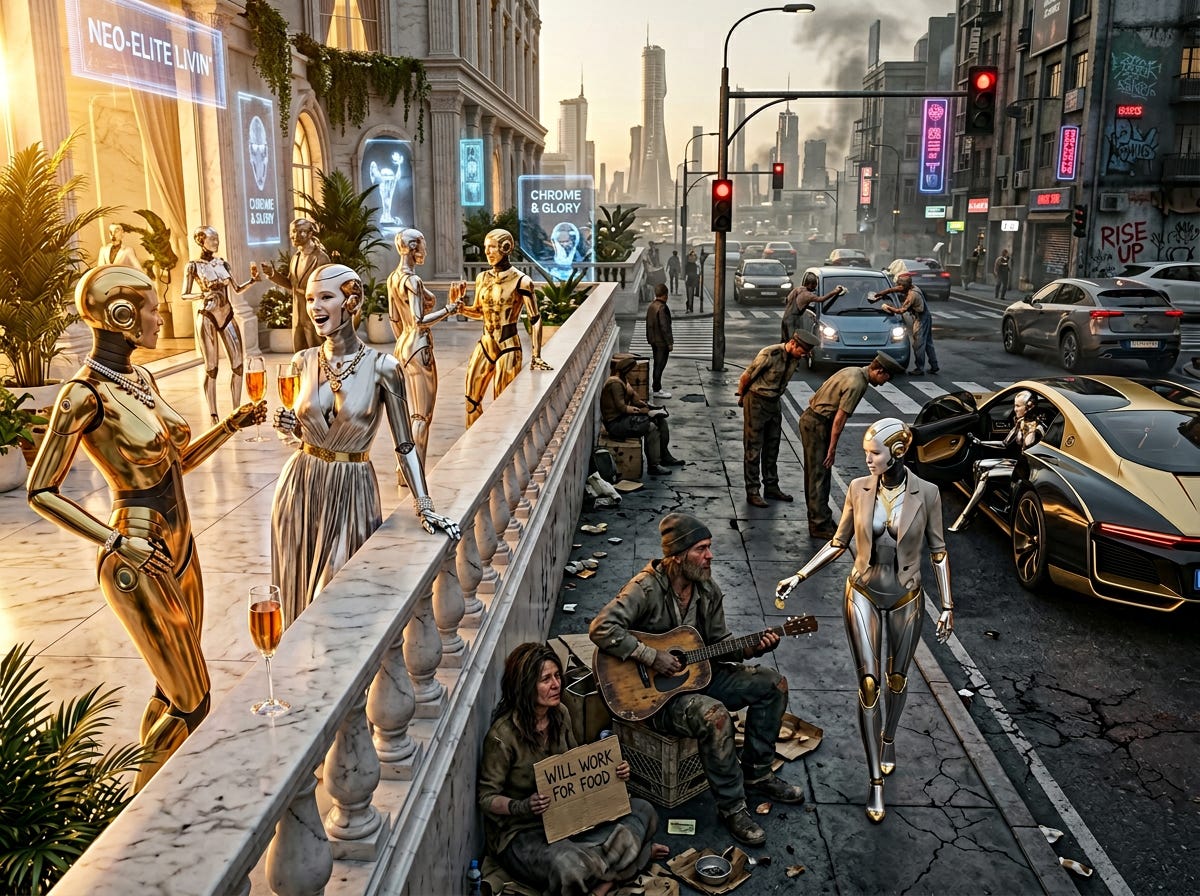
The part that scares me isn’t the future — it’s the transition. Many of us with any season have sat in countless meetings where we hear an executive say something like “...Now we know transitions are hard but...” and many of cringe a bit or hold back our lunch from coming to visit us.
What happens when millions of people lose jobs faster than new ones appear? What happens when mortgages, families, and basic survival collide with a shrinking job market? What happens when the only jobs left pay $16 an hour and require two incomes just to tread water?
I’ve said this my whole life:
“There are only so many ants you can fit on a toothpick.”
Sure, you can add more. But eventually they’re trampling each other, fighting for space, and falling off the edges.
That’s the chaos period. And we’re heading straight for it.
Regulation won’t save us — not when global competitors will happily ignore it behind closed doors. No country wants to be the one that slows down while everyone else speeds ahead.
The Strange yet Normal Irony: The Opportunity Window
Here’s the twist.
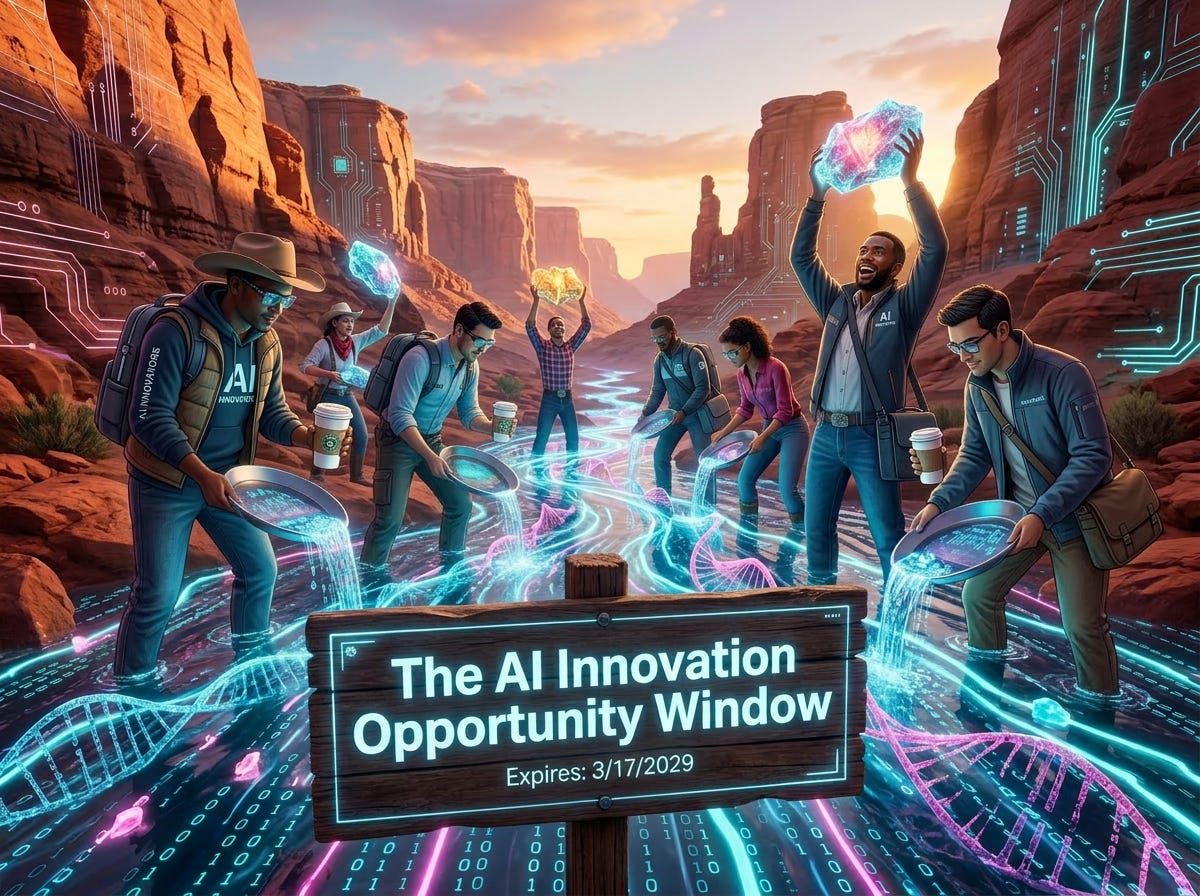
Every technological upheaval creates a brief window where individuals — not corporations — can strike gold. AI is the biggest opportunity window humanity has ever seen.
For the next 3–7 years, a single person with a good idea and an AI assistant can build what used to require a 50‑person team.
It’s a field‑leveling event.
But windows close. And this one will close fast.
Frameworks? Languages? Entire Tech Stacks? AI Doesn’t Need Them
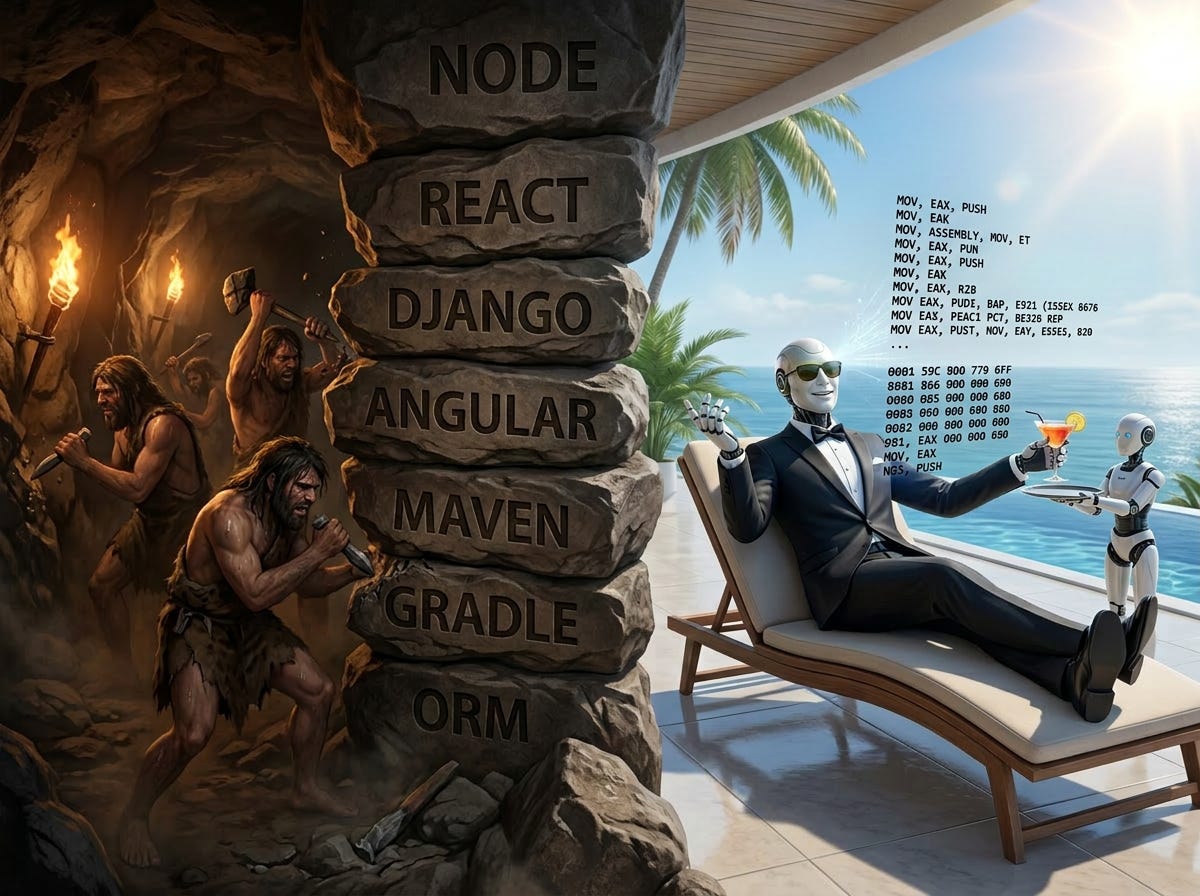
Angular, React, Spring, Node, Django — all the frameworks designed to help humans manage complexity?
AI doesn’t need them.
It can write optimized C, Java, Rust, or whatever language it decides is best. Or it may decide our languages are redundant and invent its own.
Imagine a future where:
AI writes the protocols
AI defines the standards
AI optimizes the entire stack
Humans just describe what they want
That’s not sci‑fi. That’s Tuesday in 2032.
The Roddenberry Question: What Comes After the Chaos?

This is where Star Trek comes back into the picture.
Roddenberry imagined a world where:
money didn’t matter
work was meaningful
education was free
healthcare was universal
people pursued growth, not survival
society valued “we” over “me”
As a kid, that future felt impossible — and honestly, that was okay because it was 1980 and I loved where we were then. Now, as an adult watching AI reshape the world, that world feels inevitable… and more importantly, we need that world, because the alternative is frankly scary.
Not immediately. Not smoothly. Not without pain.
But on the other side of the chaos? A post‑scarcity society is the only logical landing point.
Call it socialism. Call it capitalism 2.0. Call it the hybrid child of both.
Whatever it is, it looks a lot like Star Trek.
Scotty Beam Us Past the Hard Part

I’ll be honest: I wish Scotty could beam us past the messy middle — the layoffs, the fear, the economic upheaval — and drop us straight into the part where humanity finally grows up.
But transitions don’t work that way.
We’re going to have to walk through it.
Still, when I look at AI, at the job market, at the shifting nature of work, and at the future we’re stumbling toward, I can’t help but think:
Roddenberry wasn’t writing fiction. He was writing a preview of things to come. Was he the one really visited by three ghosts around midnight Christmas Eve?
And no matter what happens next — no matter how chaotic, how uncertain, or how transformative this era becomes — I keep coming back to a wise beyond its years phrase I’ve said countless times in my life. A very symbolic phrase that has stood the test of time and somehow feels even more meaningful and relevant as we step into an age where innovation is accelerating faster than we can fully comprehend.
Ironically, it’s one of the most human phrases ever spoken by a non‑human:
“Live long and prosper.”....................... Miss you Leanord!
About the Author:
Tim Wiley is a technologist with over 25 years of experience building, breaking, and rebuilding the systems that run the modern world. From early 2000s high volume data architecture to cloud-native AI agents, Tim has made a career out of turning chaotic data landscapes into elegant, maintainable ecosystems.
Known for his “Simplicity Beats Cleverness” philosophy, Tim helps organizations cut through the noise and avoid over-engineered traps. When he’s not untangling legacy cobwebs, he’s a vocal advocate for engineering discipline and a strategic voice for leaders who need to translate technical complexity into human-centric vision.
Looking for technical clarity or a partner to help sharpen your organization’s narrative? Connect with Tim on LinkedIn or visit HeartATech.io to see how he helps teams get back on the “highway” of simplicity.